Is DIY Solar Panel Cleaning Safe?
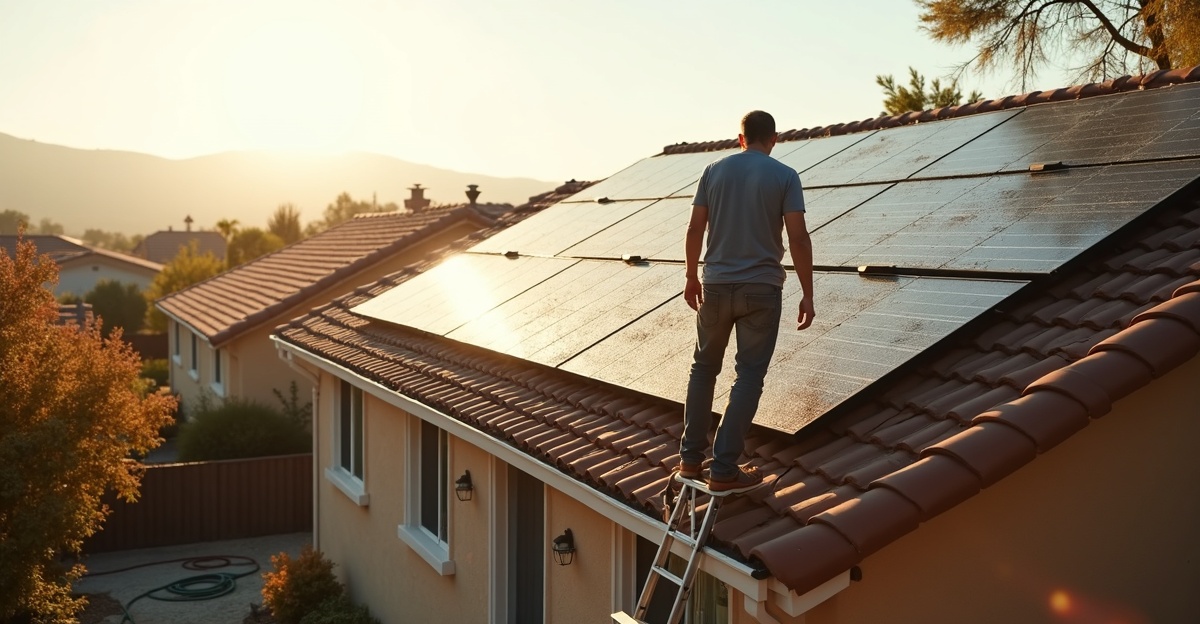
DIY solar panel cleaning safety depends on two main factors: we must prevent roof and ladder injuries, and we must protect panels, wiring, and mounting systems from damage. In areas like Fresno County, sloped tile roofs, two-story homes, dust, ash, and bird buildup raise both physical and system risks. We always evaluate the home layout, roof condition, and debris level before we decide to clean panels ourselves.
Key Takeaways
- DIY solar panel cleaning safety involves both fall prevention and protecting panels from electrical and surface damage.
- Roof slope, tile condition, and home height directly affect risk level.
- Abrasive tools, harsh chemicals, and high-pressure water can scratch glass, wear down protective coatings, and weaken seals.
- Heavy debris, hardened bird droppings, or nesting under panels increase cleaning difficulty and raise the chance of costly damage.
- Professional cleaning lowers physical risk and relies on controlled, non-abrasive methods that protect long-term system performance.
What Homeowners Should Know About DIY Solar Panel Cleaning Safety
DIY solar panel cleaning safety refers to two practical concerns: our physical safety on the roof and the protection of the solar system itself. Both matter equally. A safe cleaning process should prevent injuries and avoid damage to panels, wiring, and mounting systems.
Most homeowners researching this topic are weighing cleaning solar panels yourself against hiring a professional. The intent is practical. We want to know if it’s worth the risk, the time, and the potential savings.
The main risks fall into three categories:
- Roof and ladder hazards
- Electrical concerns
- Potential panel damage
In Fresno County, these risks are often higher than expected. Many homes have sloped tile roofs and two-story layouts. Tile can shift or crack under weight. A two-story fall can cause serious injury. That’s why DIY solar panel cleaning safety depends heavily on the specific home setup, not just confidence with a hose and ladder.
Our goal isn’t to discourage anyone. It’s to provide clear information so we can make informed decisions that protect both personal safety and a valuable home investment.
The Real Safety Risks: Roof Falls, Electrical Components, and Panel Damage
Three Primary Areas of Risk
DIY solar panel cleaning involves more than rinsing glass. The risks of cleaning solar panels usually appear in one of three areas.
First is roof safety. Sloped tile roofs are common in suburban Fresno County. Tile becomes slippery with dust, pollen, or early morning dew. Stepping in the wrong spot can crack a tile or cause a slip. Improper ladder setup is another frequent issue. If the ladder sits on uneven ground or at the wrong angle, it can shift while climbing or descending. Two-story homes increase both the likelihood of serious injury and the consequences of a fall.
Second are electrical concerns. Solar panels generate electricity whenever they’re exposed to sunlight. The wiring and connections are sealed and built for weather, but they aren’t meant to be handled casually. If wiring is loose, damaged, or improperly disturbed during cleaning, there’s a risk of electrical shock. Most homeowners aren’t trained to identify compromised connectors or worn insulation.
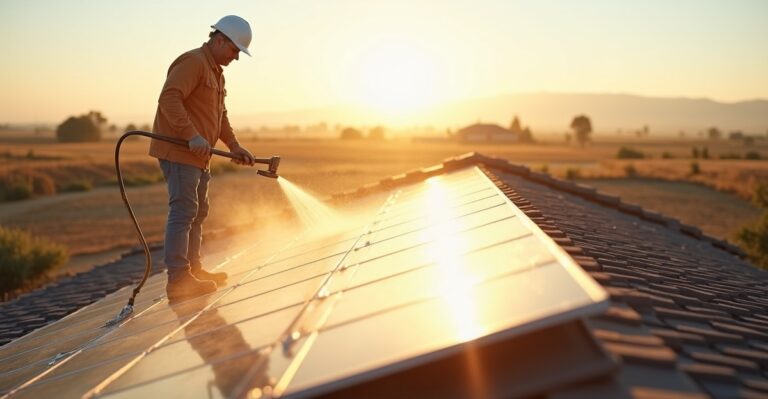
Third is panel damage. Many issues come from good intentions but the wrong tools. Abrasive brushes can create fine scratches on the glass surface. These micro-scratches may seem minor but can affect light transmission over time. Harsh chemicals can damage protective coatings and may void manufacturer warranties. Using high-pressure water can loosen seals or force water into electrical connections, leading to hidden problems later.
The risks of cleaning solar panels aren’t exaggerated dangers. They’re practical concerns based on common roof types, electrical systems, and panel materials. Understanding these risks helps us decide how much exposure we’re comfortable with.
Local Factors in Fresno County That Make DIY More Complicated
Fresno County presents conditions that make panel cleaning more frequent and sometimes more demanding.
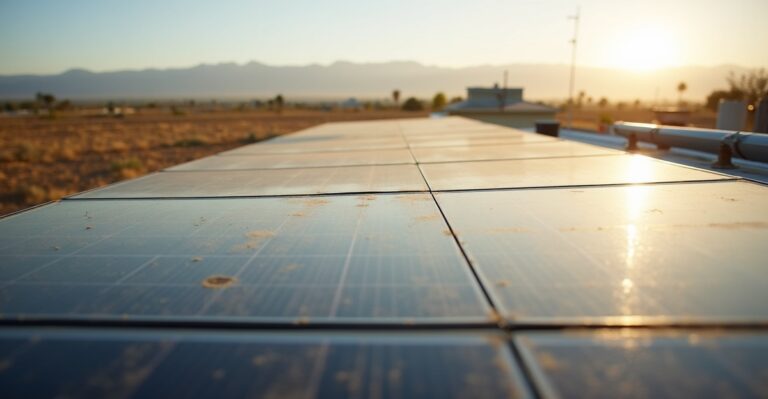
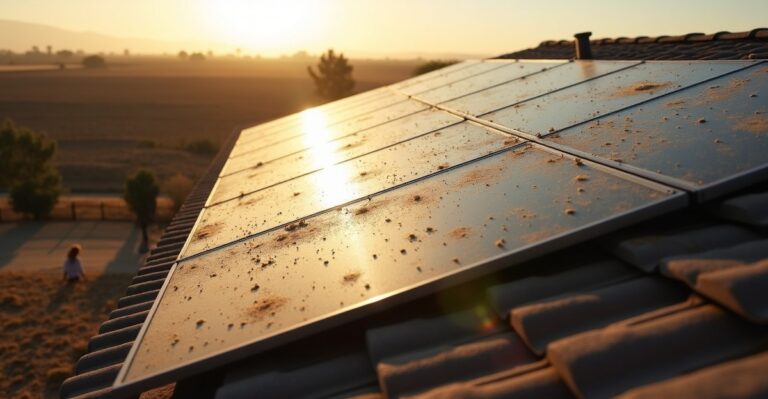
Dry summers create heavy dust buildup. Wind moves fine particles across rooftops and settles on panel surfaces. Spring brings pollen accumulation. During wildfire season, ash can coat panels and mix with morning moisture, forming a thin film that sticks. In many suburban neighborhoods, bird droppings add another challenge. Some homes also experience bird nesting under panels.
At first glance, light surface dust looks manageable. A quick rinse seems like it should solve the issue. In practice, debris often bonds to the glass. Ash mixed with dew becomes sticky. Bird droppings bake in the sun and harden. Pollen can form a film that requires more than light spraying.
These regional conditions increase both the frequency and difficulty of cleaning solar panels yourself. Over time, consistent buildup can reduce system efficiency if left untreated. Solar systems are designed to perform for decades, but performance depends on keeping panels reasonably clear of obstruction.
For guidance on timing, we often review general maintenance recommendations like those in how often solar panels should be cleaned. In dusty and dry climates, intervals may be shorter than homeowners expect.
When DIY May Be Reasonable — and When It Becomes High-Risk
DIY solar panel cleaning isn’t automatically unsafe. The level of risk changes based on property layout and the condition of the panels.
DIY may be manageable in situations such as:
- Single-story home
- Easy and stable roof access
- Minimal roof slope
- Light dust only, no heavy buildup or nesting
In these cases, using a soft brush, non-abrasive methods, and proper ladder placement may keep risks lower. Even then, we need to move cautiously and avoid unnecessary pressure on tiles or panel frames.
Risk increases significantly in other situations:
- Steep or fragile tile roofs
- Two-story homes with difficult ladder positioning
- Heavy dirt, hardened bird droppings, or thick debris
- Visible signs of bird nesting under panels
- Discomfort or lack of experience with heights
Roof design plays a major role. Tile roofs can crack if weight is placed in the wrong area. Steeper slopes increase the chance of losing balance. Heavy debris may tempt us to scrub harder or use stronger chemicals, which raises the risk of surface damage.
DIY solar panel cleaning safety depends on honest assessment. If access feels unstable or buildup is severe, the project shifts from manageable to high-risk. The decision should reflect comfort level, physical ability, and the overall condition of the system.
How Professional Solar Panel Cleaning Reduces Risk
Professional solar panel cleaning focuses on two outcomes: reducing physical risk and protecting the panels.
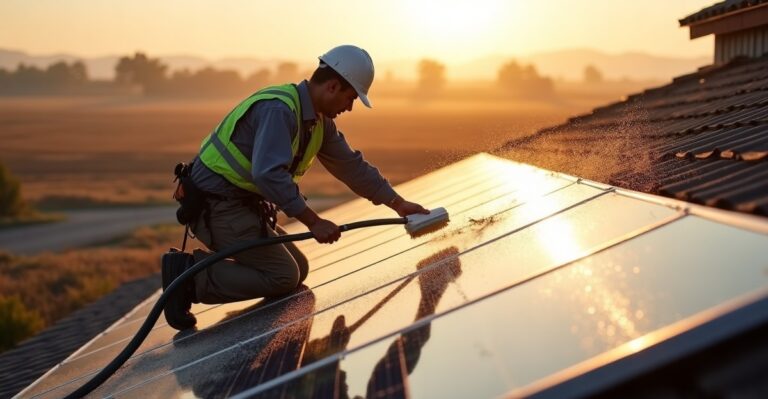
A typical service includes safe roof access techniques. Proper ladder setup and awareness of fall risks are standard. Technicians understand how to move across tile roofs without causing damage.
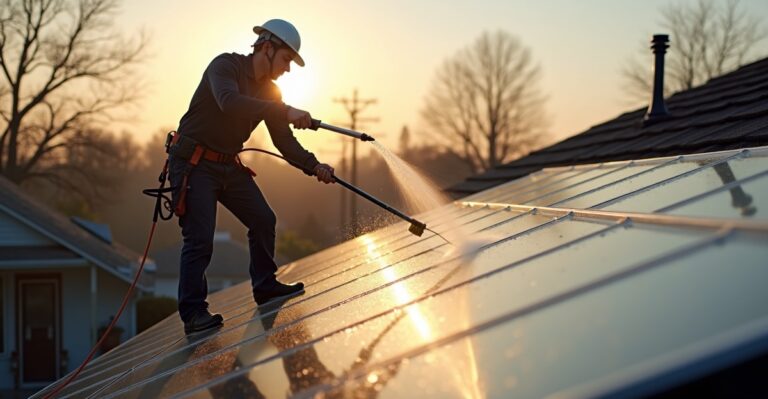
Cleaning methods matter as well. We use non-abrasive tools and purified water systems that help prevent mineral spotting. High-pressure washing is avoided. The process is controlled and gentle, aimed at removing buildup without harming protective coatings.
In addition to cleaning, a visual inspection can identify obvious debris accumulation, signs of nesting, or surface issues. For homes with recurring bird problems, added protection through solar panel bird proofing may be recommended to prevent future buildup and nesting.
For homeowners in the area, local support makes scheduling easier. Those interested in solar panel cleaning in Fresno often choose professional service to avoid roof access altogether. This is especially helpful for busy households and dual-income families with limited time.
Clear pricing is part of the decision process. Reviewing general cost considerations, such as those outlined in how much it costs to clean solar panels, helps compare DIY effort with professional service.
The primary advantage is reduction of risk. Physical exposure decreases. The chance of accidental surface damage drops. Electrical components remain undisturbed.
Protecting Your Solar Investment Over the Long Term
Solar systems are a significant investment. Most are expected to last 20–25 years or longer. Over that lifespan, cleaning methods matter.
Improper tools can cause micro-scratching. Damaged coatings may reduce light transmission gradually. High-pressure water can weaken seals over time. None of these issues show immediate dramatic failure, but small effects can accumulate.
The decision between cleaning solar panels yourself and hiring a professional is ultimately about safety and asset protection. Cost plays a role, but so does system longevity. Short-term savings should not compromise long-term performance.
If there’s uncertainty about roof access, electrical components, or heavy debris, having a qualified local professional assess the system provides clarity. A simple evaluation can confirm whether DIY is reasonable or whether outside help is the safer option.
Thoughtful maintenance protects both personal safety and the performance of the system. Clear information leads to better decisions, and careful cleaning preserves the value of the solar investment for years to come.