What Tools Are Used for Solar Panel Cleaning?
Solar panel cleaning tools include specialized soft brushes, purified water systems, water fed poles, and roof safety equipment built to clean residential panels without damage. We use these tools to protect tempered glass surfaces, prevent mineral spotting, and reduce fall risk on sloped roofs. Proper equipment also helps us maintain steady system performance when dust, pollen, or bird droppings accumulate.
Key Takeaways
- Professional solar panel cleaning tools use non-abrasive brushes and purified or deionized water to prevent scratches and mineral residue.
- Water fed pole systems deliver controlled water flow and allow us to clean more safely from the ground or from stable ladder positions.
- Pressure washers and harsh chemicals can damage seals, scratch glass, and void manufacturer warranties.
- Roof safety equipment such as harness systems, anchors, and ladder stabilizers keeps us secure on sloped or multi-story homes.
- We recommend professional service for steep roofs, heavy buildup, bird droppings, and any situation where safety or access raises concern.
The Essential Solar Panel Cleaning Tools That Protect Your Investment
Solar panel cleaning tools are specialized brushes, water systems, and safety equipment designed to clean residential solar panels without causing damage. Using the right equipment protects the tempered glass surface, preserves manufacturer warranties, and reduces the risk of accidents on sloped roofs common in Fresno County and surrounding suburban areas.
Residential systems are a long-term investment. Proper solar panel cleaning tools help maintain performance when panels are covered in dust, pollen, or bird droppings. Cleaning can support efficiency by removing buildup that blocks sunlight, but it is important to maintain realistic expectations. Results depend on how much dirt is present. If panels are already relatively clean, performance gains may be minimal.
Improper tools create serious problems. Pressure washers can force water into seals and around wiring. Abrasive brushes can scratch the glass. Harsh chemicals can leave residue and potentially void warranties. Because most residential systems are installed on pitched roofs, both surface sensitivity and safety considerations matter. The method is just as important as the cleaning itself.
Core Solar Cleaning Equipment Professionals Use
Professional solar cleaning equipment is built specifically for residential rooftop systems. It focuses on gentle contact, purified water, and controlled roof access rather than chemicals or force.
Soft Brushes and Purified Water Systems
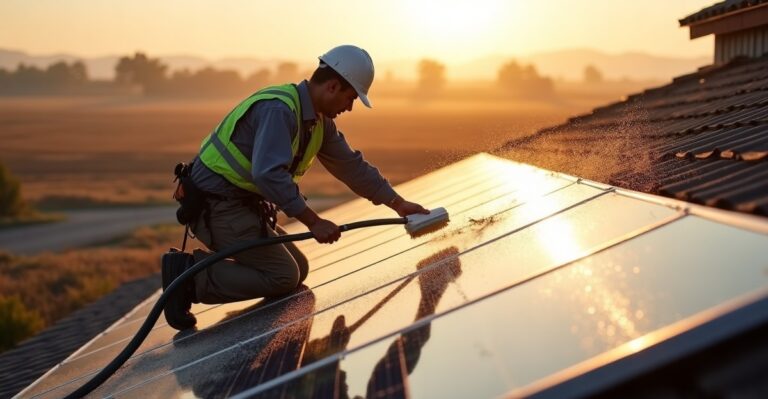
Brushes for solar panels use non-abrasive bristles that lift dust and pollen without scratching tempered glass. The bristles are soft yet structured enough to remove light debris and surface grime effectively. Wide brush heads allow for even coverage and help reduce streaking across each panel.
Water quality is equally important. In areas like Fresno County, tap water often contains minerals. When untreated water dries on panels, it can leave spotting or a thin mineral film.
Professionals use deionized or purified water systems to remove minerals before the water reaches the panel surface. Panels dry spot-free without the need for soaps or chemicals. This leaves a clean finish without residue that could affect light exposure.
This method avoids detergents entirely. Purified water combined with the right soft brush safely handles most residential buildup.
Water Fed Pole Solar Cleaning Systems
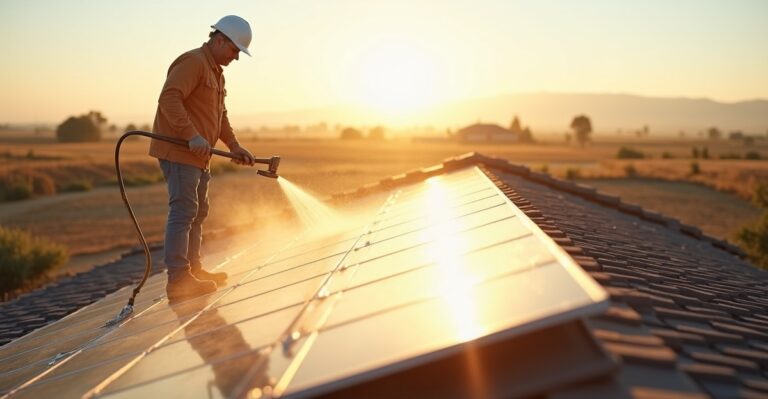
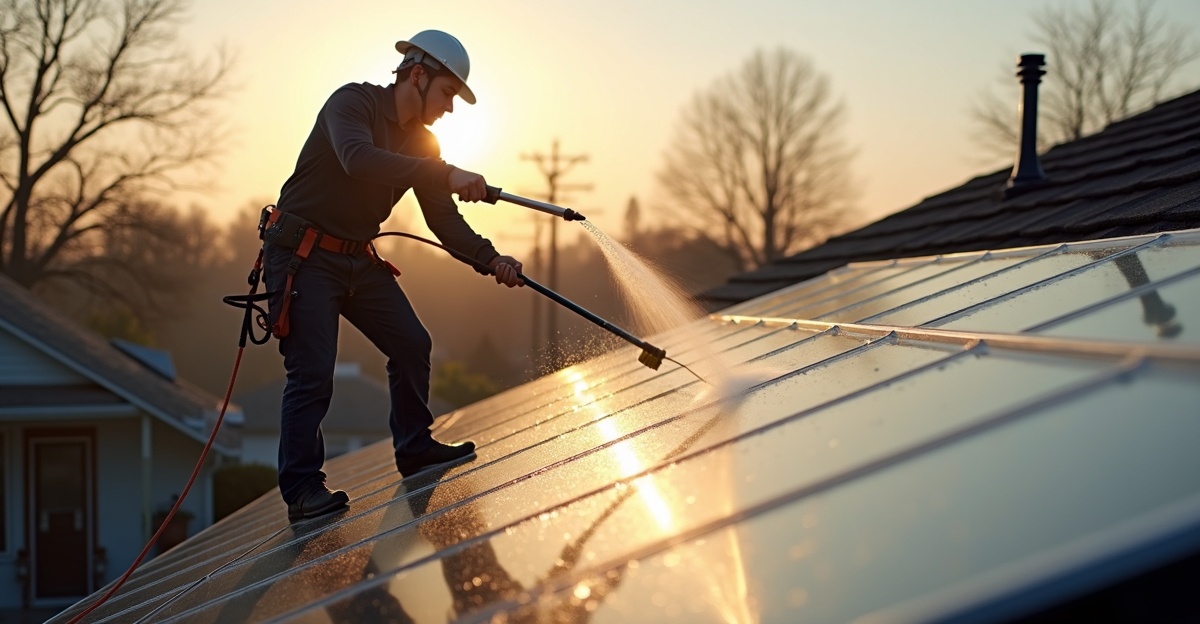
Water fed pole solar cleaning systems combine extendable poles with purified water delivery. Water flows internally through the pole to the brush head. This design allows cleaning from the ground or from carefully positioned ladder setups when appropriate.
Water fed pole solar cleaning reduces the need to walk directly on the roof. This protects roofing materials and minimizes disturbance to mounting hardware. It also allows for controlled water flow and better movement precision.
These systems are specifically designed for residential rooftops. Unlike equipment used on commercial solar fields, residential cleaning prioritizes safety, careful access, and roof awareness over speed.
Safety Equipment and Roof Protection Measures
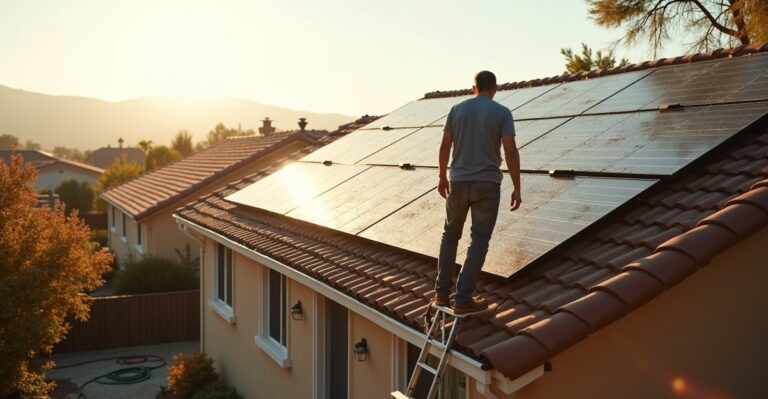
Cleaning solar panels involves working at height. In many cases, roof access presents more risk than the cleaning itself. Sloped roofs, tile materials, and second-story homes significantly increase fall hazards.
Professional crews use safety systems tailored to each roof type. These typically include:
- Structured harness systems with secure anchor points
- Ladder stabilizers to prevent shifting
- Controlled ladder placement away from fragile roof sections
- Careful route planning before accessing panels
Homeowners should exercise extreme caution before attempting to access steep or multi-story roofs. Even a fall from a single-story roof can result in serious injury.
Safety procedures are one of the primary differences between DIY cleaning and professional service. Cleaning the panel surface may be straightforward. Accessing it safely is the greater challenge.
DIY Tools vs. Professional Solar Cleaning Equipment
Some homeowners choose to clean panels themselves. This may be reasonable in limited scenarios depending on roof slope, height, and buildup levels.
A basic DIY approach may include:
- A soft brush attached to an extension pole
- A standard garden hose (without pressure attachment)
- Basic ladder use with caution
A pressure washer should never be used on residential solar panels.
DIY methods come with limitations. Tap water can leave spotting. Extension poles may not safely reach all sections. Steeper roofs increase fall risk. Working near wiring and hardware requires careful attention.
Professional solar cleaning equipment provides several advantages:
- Purified water systems reduce mineral spotting.
- Water fed poles improve safe access for many single-story homes.
- Experience and training reduce the risk of roof or panel damage.
- Efficiency allows the job to be completed more quickly.
Cost and time also factor into the decision. Purchasing equipment and dedicating hours to cleaning may outweigh the expense of a professional visit. Homeowners comparing options can review solar panel cleaning cost considerations to better understand typical pricing and weigh that against roof safety and accessibility.
When Professional Solar Panel Cleaning Is Recommended
Certain conditions strongly favor professional service:
- Steep or tile roofs
- Second-story or multi-story homes
- Heavy dust or pollen buildup
- Bird droppings or sticky residue
- Limited safe roof access
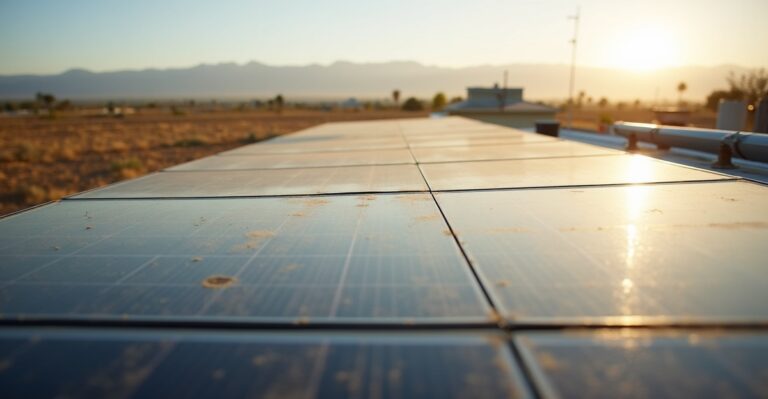
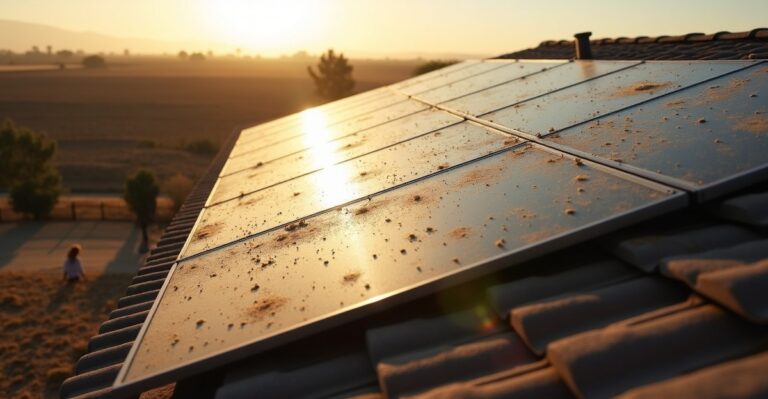
Dry, dusty conditions in Fresno County often create fine surface buildup over time. During dry seasons, panels may appear visibly dull or streaked. In these cases, a professional evaluation can help determine whether cleaning is appropriate.
Heavily soiled panels may experience performance increases once sunlight exposure improves. However, the level of improvement varies depending on prior buildup. There are no guaranteed energy gains, but maintaining a clean surface supports consistent output.
Homeowners seeking evaluation or structured service can explore local options such as solar panel cleaning in Fresno. Additional information about residential solar panel cleaning services explains what to expect during a professional visit.
Common Questions About Solar Panel Cleaning Tools
Are pressure washers safe for solar panels?
No. High pressure can damage seals, frames, and glass surfaces. It may also force water beneath panel edges and potentially void warranties. Proper solar panel cleaning tools rely on controlled water flow and non-abrasive brushes instead.
How often should panels be cleaned in dusty areas like Fresno County?
Most residential systems benefit from cleaning once or twice per year. The optimal schedule depends on dust levels, nearby trees, and bird activity. For more detailed recommendations, review how often to clean solar panels.
Rain can remove loose dust, but it does not effectively eliminate bird droppings or sticky residue. Using proper solar cleaning equipment with purified water ensures a more thorough result.
For additional questions about solar panel cleaning tools, safety practices, or scheduling service, review the frequently asked questions section or submit an inquiry through the contact page.