Can Rain Clean Solar Panels Properly?
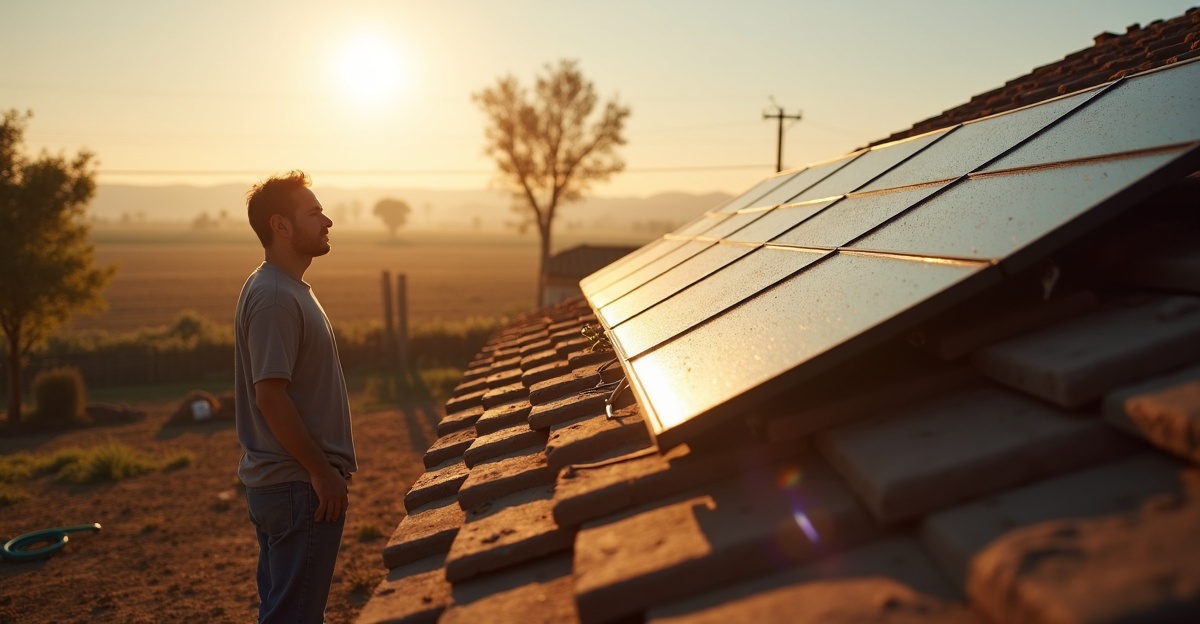
Many homeowners ask if rain cleans solar panels well enough to maintain strong performance in Fresno County. In our climate, light and seasonal rainfall can rinse away loose dust, but it often leaves residue behind after long dry stretches, nearby farming activity, and hard water exposure. Rain alone rarely replaces routine manual or professional cleaning.
Key Takeaways
- Rain can remove loose dust and light pollen, but it does not effectively wash away stuck debris like bird droppings, tree sap, or mineral stains.
- Fresno County’s extended dry seasons, airborne dust, and irrigation overspray often create buildup that light rainfall cannot fully clear.
- Solar panels shed water by design, yet low-slope roofs and fast evaporation can leave streaks and residue behind.
- Dirt accumulation can reduce system efficiency by about 5–20% over time, depending on site conditions and maintenance habits.
- Routine visual inspections and scheduled cleanings protect energy production when rainfall alone does not keep panels clear.
Does Rain Really Keep Solar Panels Clean Enough in Fresno County?
Does rain clean solar panels well enough to maintain peak performance? Rain can help rinse loose debris, but in most Central California conditions, it does not fully clean panels.
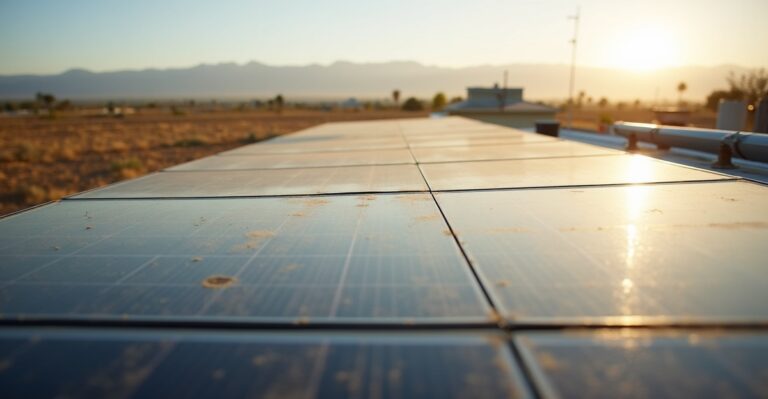
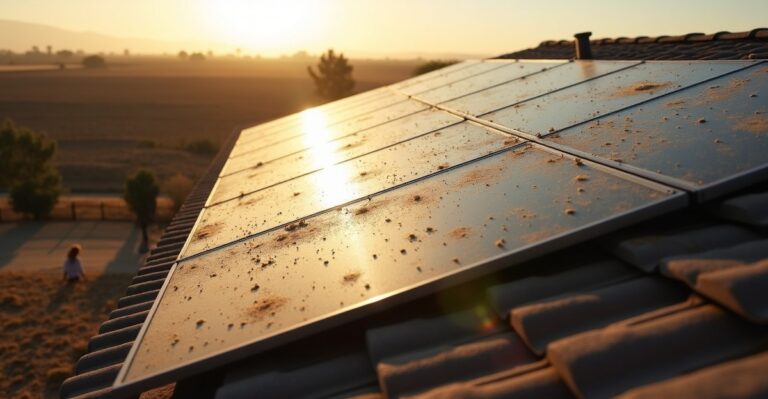
Fresno County has long dry seasons, frequent dust, agricultural activity, and hard water exposure. Light rain often mixes with built-up dust and dries quickly. Instead of washing panels fully clean, it can leave a thin film behind.
Local panels face:
- Dust and fine soil from dry fields
- Heavy pollen during seasonal blooms
- Agricultural residue
- Bird droppings
- Irrigation overspray and hard water spots
Rain can reduce some surface dirt. However, visible buildup and residue are common, especially after extended dry stretches.
Over time, accumulated dirt can reduce system efficiency. Depending on the amount and type of buildup, performance can drop by about 5–20%. We don’t present this as an alarm, but as a practical reality. Homeowners often compare rain vs manual cleaning solar panels to determine if natural rainfall is enough. In most Fresno County cases, rain helps maintain panels to a degree but does not replace periodic cleaning.
How Solar Panels Are Designed to Shed Water and Debris
Solar panels are built with durability and drainage in mind. Installers mount them at a tilt so gravity helps debris slide down. Each panel is covered with smooth tempered glass. That surface allows rainwater to run downward, carrying some loose particles with it.
Proper tilt plays an important role in natural cleaning of solar panels through rainfall. Steeper roof pitches allow water to flow more freely. A heavy downpour on a well-angled roof can rinse away loose dust fairly effectively.
However, panels are not self-cleaning in the same way as specialty window coatings. They rely on external water flow and gravity. They do not break down or repel stuck contaminants on their own.
Flat or low-pitch installations hold more residue. On these systems, water may pool or move slowly, leaving streaks behind. Light rain may bead up and evaporate before fully rinsing the surface. In hot Central California climates, fast evaporation often leaves mineral traces behind.
Design helps. It does not eliminate maintenance.
What Rain Can Remove and What It Cannot
Rainwater has limited cleaning force. Its effectiveness depends on intensity, duration, and the type of buildup present.
Here’s what rain can realistically remove:
- Loose surface dust
- Light pollen
- Small, dry debris
Rain struggles with heavier or sticky materials. It typically cannot remove:
- Bird droppings
- Sticky tree sap
- Caked mud
- Hard water residue from irrigation overspray
- Oily or agricultural buildup common in rural and suburban Fresno County
Heavier contaminants bond to the glass surface. They require more force or controlled scrubbing than rainfall provides. A light shower will not dissolve dried droppings or hardened mineral spots.
Heavy downpours perform better than brief showers. Consistent, strong rain can improve overall cleanliness, but even then, streaking or residue often remains in dusty regions.
Natural cleaning of solar panels works best in areas with regular, heavy rainfall throughout the year. Central California does not experience that pattern. Long dry summers allow debris to accumulate, which light seasonal rains cannot fully reverse.
Rain vs Manual Cleaning vs Professional Service
Homeowners often compare rain vs manual cleaning of solar panels to determine the next step.
Rain has no cost and requires no effort. Its limitation is effectiveness in dry, dusty climates like Fresno County.
DIY manual cleaning can improve appearance and output. However, it comes with risks:
- Roof slip hazards
- Potential panel cracking from improper footing
- Scratching glass with abrasive brushes
- Water intrusion from pressure washers
- Mineral spotting from untreated hose water
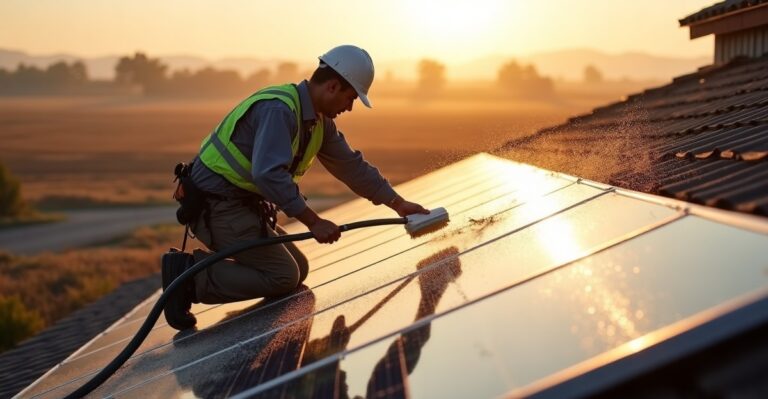
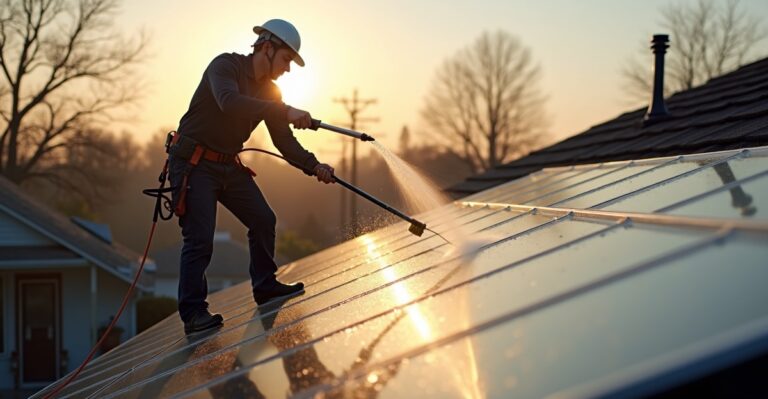
Professional service provides a safer and more consistent solution. Our solar panel cleaning service focuses on protecting both the system and the roof. We use proper access techniques, safe tools, and purified water that dries without residue. We remove stubborn debris carefully and thoroughly.
Time also matters. Many homeowners between 30 and 65 juggle work, family, and home responsibilities. Climbing onto a roof is often the last task they want to handle. Professional cleaning reduces hassle and risk.
DIY may be appropriate when panels are easily reachable from the ground and light dirt is present. In many cases, professional service offers better long-term consistency, especially after extended dry seasons.
Signs Your Solar Panels Likely Need Cleaning
Visible buildup is the most obvious sign. If dirt, streaks, or bird droppings remain after rainfall, panels likely need attention.
Look for irrigation spray buildup near panel edges. Hard water often leaves white or cloudy marks that rain will not remove.
Track system performance through the monitoring app or inverter display. A noticeable drop in output compared to previous months—after accounting for seasonal sunlight changes—may signal dirt buildup.
Extended dry periods with minimal rainfall also increase the likelihood of buildup.
Use simple inspection habits:
- Check panels visually from the ground every few months.
- Plan a more intentional review once or twice per year.
- Pay extra attention after heavy pollen season or long summer droughts.
For detailed guidance, we explain typical inspection intervals in how often solar panels should be cleaned.
The goal is straightforward. We protect the solar investment with practical observation and scheduled care. We avoid over-maintaining, but we also avoid ignoring visible buildup.
Common Questions About Rain and Solar Panel Cleaning
Quick Answers for Fresno County Homeowners
Does heavy rain clean solar panels properly?
Heavy rain can rinse panels better than light rain. It often removes loose dust and debris. Even so, residue and mineral spots may remain, especially in dusty regions.
How often should solar panels be inspected in Fresno County?
Inspect systems at least once per year. Add additional checks after long dry periods or high pollen seasons.
Will dirty panels stop working?
No. Panels will continue to function. Dirt buildup can gradually reduce efficiency and overall return on investment.
Is it safe to spray panels with a garden hose?
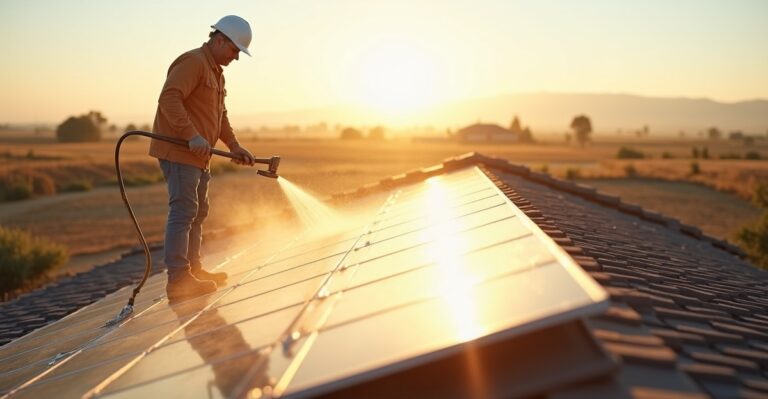
Spraying from the ground with low pressure and soft water is generally safer. Avoid climbing onto the roof without proper safety measures. Do not use high pressure.
When should professional cleaning be considered?
Consider professional help when visible buildup remains after rain, when performance drops are suspected, or when roof access is unsafe. Homeowners in the area can explore solar panel cleaning in Fresno if consistent maintenance is needed.
Protecting solar panels relies on routine observation and practical care. We don’t react to every rainstorm. We respond to visible buildup, performance trends, and local environmental conditions with measured, reliable maintenance.