How Much Efficiency Do Dirty Solar Panels Lose?
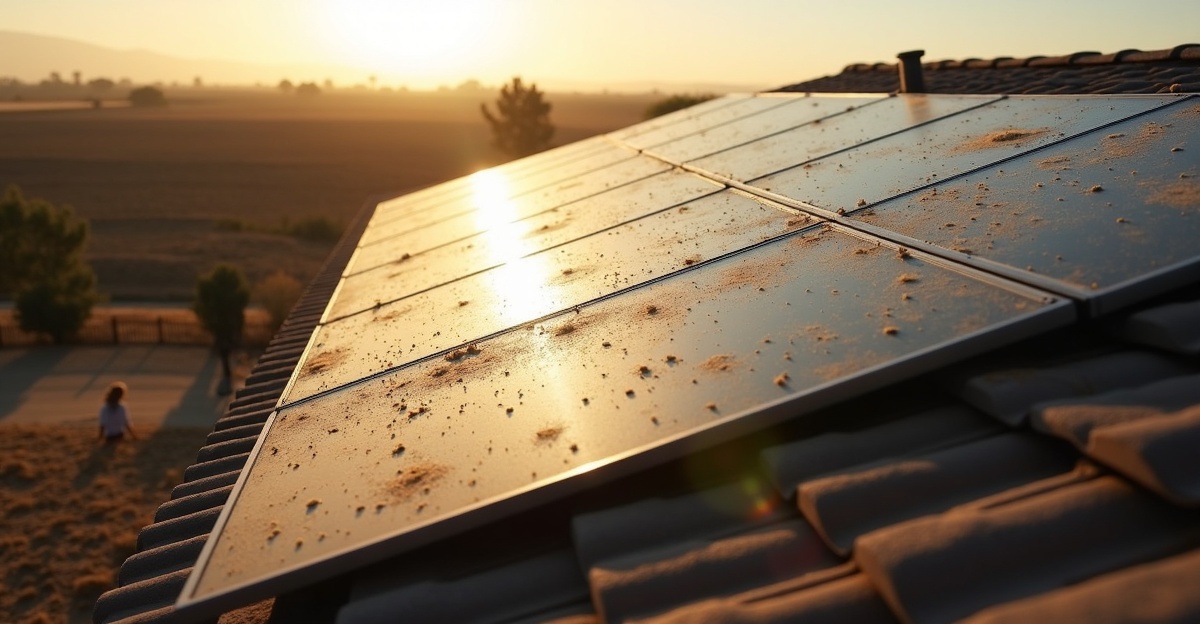
Dirty solar panels reduce efficiency by 5% to 15% under normal dust buildup. In heavier conditions or during long dry stretches, losses can exceed 20%. We see the actual impact vary based on local factors such as Fresno County’s dust, pollen, wildfire ash, limited rainfall, panel tilt, and the type of debris blocking sunlight. Each factor directly affects how much energy a system produces over time.
Key Takeaways
- Most residential systems lose 5% to 15% efficiency from normal dirt buildup, and heavier debris can push losses beyond 20% if we leave panels uncleaned.
- Fresno County conditions such as agricultural dust, pollen, wildfire ash, bird droppings, and extended dry seasons increase the likelihood of noticeable production decline.
- Light dust reduces output gradually, while thick residue and localized shading from droppings or leaves can cut panel performance more sharply.
- Rain can rinse away loose dust, yet it often leaves pollen, mud residue, mineral spots, and hardened debris behind that continue to limit performance.
- We recommend comparing current production to prior years and checking for visible buildup to decide when professional cleaning can restore system efficiency.
What Happens to Solar Output When Panels Get Dirty
Most residential systems experience a 5% to 15% solar panel efficiency loss due to normal dirt and dust buildup. In heavier conditions, studies show losses can exceed 20% if panels are not cleaned for extended periods.
Dirty solar panels efficiency depends heavily on the environment and maintenance habits. Some homes see only minor impact, while others experience a noticeable solar performance drop over time.
A 10% dirty panels output loss on a 6 kW system may not sound large, but over a year it can mean a meaningful reduction in total energy production. That difference can affect utility bills, especially during high-use summer months in Fresno County.
The goal isn’t to create urgency. It’s to provide clear information so we can make practical decisions about maintaining our systems. Solar panel efficiency loss happens gradually in most cases. Understanding what’s normal helps us respond at the right time.
Why Some Systems Lose More Than Others in Fresno County
Local conditions in Fresno County play a direct role in dirty solar panels efficiency.
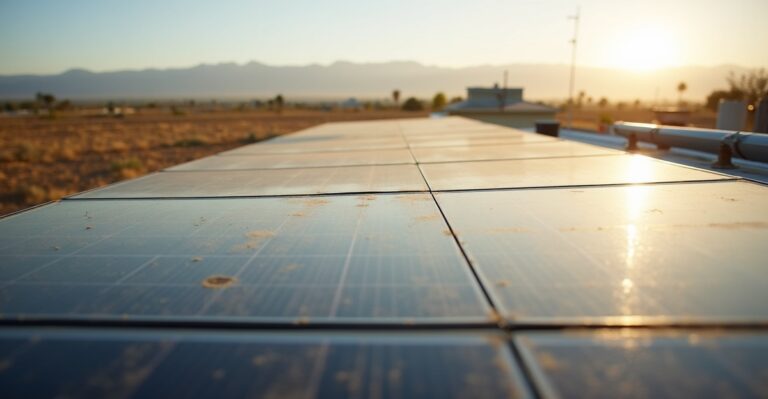
The Central Valley produces steady dust due to dry soil and agricultural activity. During spring, heavy pollen adds another layer of buildup. In wildfire season, ash can settle quickly and coat panels. Bird activity creates droppings that harden on the glass. Suburban traffic also adds fine particulate matter that sticks to panel surfaces.
Panel design and installation angle matter as well. Lower tilt angles tend to hold more dust and debris. Steeper panels shed material more easily, especially during rainfall.
Rainfall patterns in Fresno are seasonal and limited. Long dry stretches allow dirt to accumulate without natural rinsing. Coastal climates often receive more frequent light rain that helps reduce surface buildup. That natural cleaning is less consistent in our area.
Efficiency loss varies by location, tilt angle, rainfall, and debris type. Two homes in the same neighborhood can experience different solar performance drop levels based on roof pitch and surrounding conditions.
Light Dust vs. Heavy Buildup: How Different Debris Affects Efficiency
Not all debris affects output in the same way.
A light, even film of dust usually causes a gradual 5% to 10% solar panel efficiency loss. Production declines slightly but steadily. Many homeowners don’t notice right away.
Heavier buildup creates greater issues. Thick dust layers or mud that forms after light rain can block more sunlight. Instead of rinsing clean, small rain events can combine with dust and leave hardened residue.
Bird droppings and leaves create localized shading. Solar panels are made up of interconnected cells. When one section is blocked, it can reduce the output of the entire panel. Even a small shaded area can cause disproportionate dirty panels output loss.
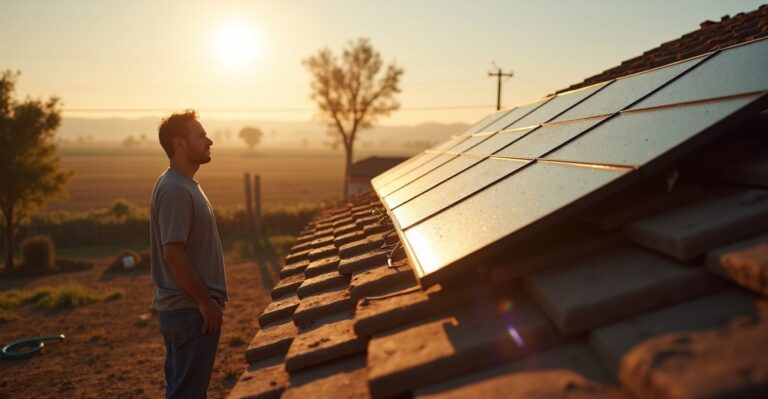
Visible debris is often the first sign that cleaning may help restore dirty solar panels efficiency. If we can clearly see droppings, ash patches, or streaking, production is likely affected to some level.
Does Rain Clean Solar Panels Enough?
Rain helps, but it rarely restores panels fully.
A steady rainfall can rinse off loose dust. However, it does not completely remove sticky pollen or dried bird droppings. Mud residue after light rainfall often remains baked onto the glass.
Short or light showers can leave mineral spots or streaks as water evaporates. These deposits may slightly block sunlight or create uneven buildup patterns.
Fresno’s extended dry periods allow dirt to accumulate between storms. During drought-like stretches, there may be months without meaningful rinsing. Over time, this can contribute to measurable solar panel efficiency loss.
In some seasons, rain reduces minor buildup. Still, it should not be assumed to fully restore solar performance. A visual check after the rainy season gives a clearer picture of actual conditions.
How to Tell If Efficiency Loss Is Significant
Monitoring tools make it easier to evaluate performance. Most modern systems include inverter displays or app-based monitoring that show daily and monthly production.
We recommend comparing current output to the same months in previous years. Seasonal variation is normal, but consistent underperformance may indicate a solar performance drop linked to dirt.
Here are practical signs that cleaning may be worth considering:
- Noticeable decline in energy output compared to similar months in previous years
- Higher utility bills despite similar usage patterns
- Clearly visible debris, bird droppings, or ash buildup on panels
Cleaning isn’t required on a rigid schedule. Production trends and visible conditions should guide the decision. For homeowners who want more detailed guidance, we cover timing considerations in how often to clean solar panels.
Seasonal visual checks combined with output comparisons reduce guesswork. This approach keeps maintenance practical and data-driven.
What Professional Solar Panel Cleaning Involves and When It Makes Sense
Professional cleaning focuses on safety and protecting the panels.
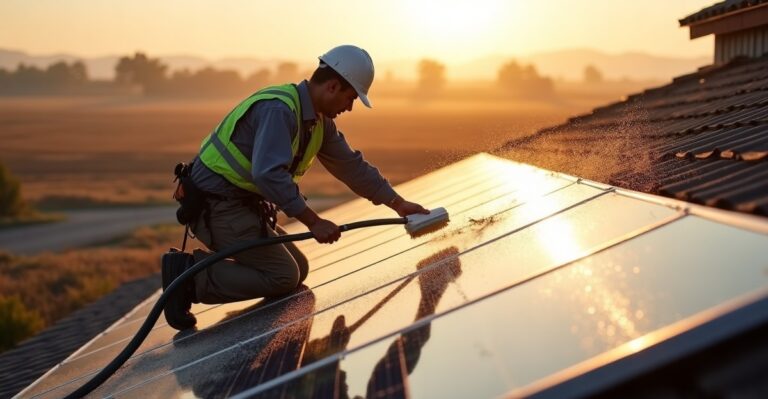
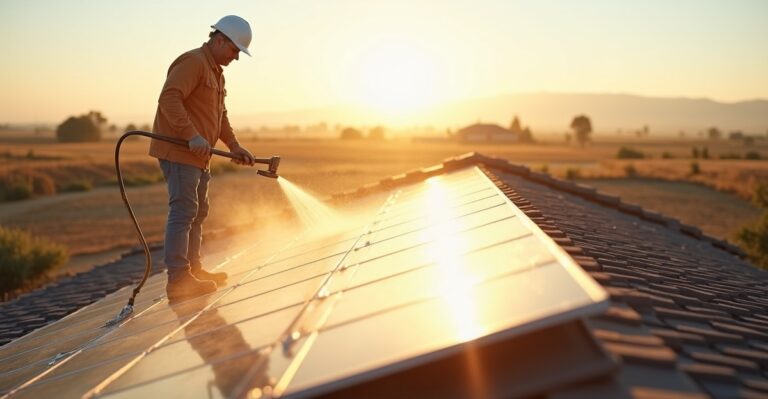
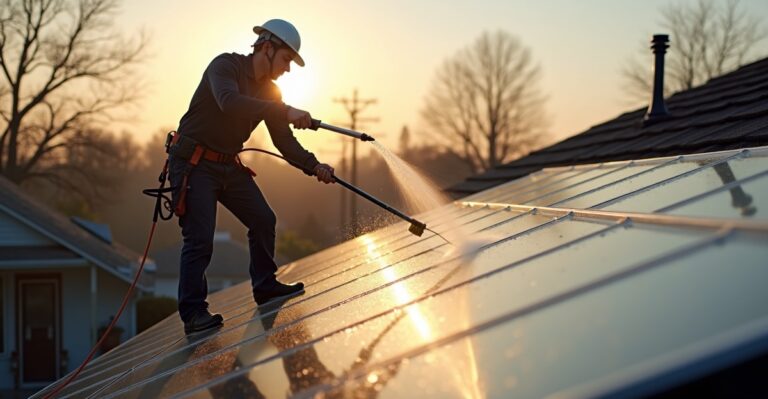
We typically use soft washing or low-pressure methods. Purified or deionized water prevents mineral spotting. Non-abrasive tools protect the glass surface and factory coatings. Proper roof safety equipment reduces risk during the process.
DIY cleaning has limits. Climbing onto the roof carries safety hazards. Using harsh chemicals or abrasive brushes can scratch the glass or damage protective layers. Some homeowners also risk voiding warranties or encountering electrical hazards.
Professional service reduces those risks while helping maintain dirty solar panels efficiency over the long term. The goal is simple: restore surface clarity without harming the system.
For homeowners evaluating service options, our solar panel cleaning service explains the process clearly. Fresno-area homeowners can also review local service details at solar panel cleaning in Fresno, CA.
If cost is part of the decision, we outline typical pricing factors in how much it costs to clean solar panels. For additional solar maintenance topics, our solar cleaning blog provides practical guidance.
If buildup is heavy due to bird nesting, solar panel bird proofing can help prevent recurring debris.
Cleaning supports consistent production and protects a long-term home investment. If we’re unsure how much dirt is affecting current output, a professional inspection can help evaluate present performance and recommend the next practical step.